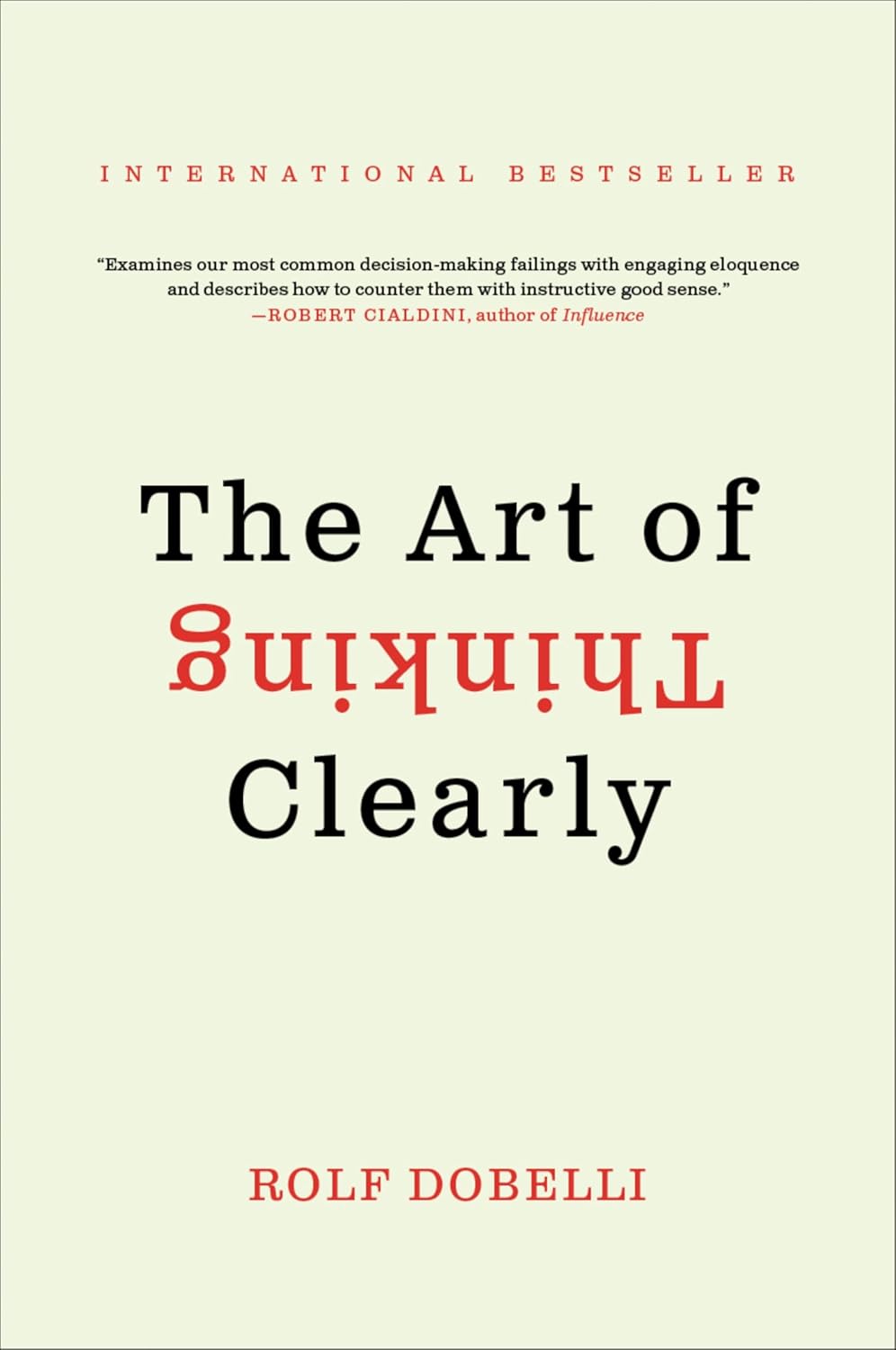
Probably at a bookstore. I’ve had this book for a very long time. It’s pages are yellowed and stained from use.
Why I picked it up?
I don’t remember.
When I read it?
This is one of those books I keep coming back to. Whenever I feel like, I need a brain reset, I pick up this book and skip to relevant chapters.
Main topic...
How cognitive biases distort judgement and decision-making in everyday life. The book looks at common thinking errors, mental shortcuts, and situations where people believe they are being rational but are not.
Key ideas...
Humans do not make decisions objectively.
We often rely on shortcuts, stories, emotions, and incomplete information.
Confidence is not the same as correctness.
Simplicity can improve thinking.
Small biases accumulate into larger mistakes.
Examples covered include:
confirmation bias
survivorship bias
social proof
overconfidence
availability bias
What I learned?
This book made me pay more attention to how decisions are made rather than only whether the final answer is right. I found myself thinking about:
where assumptions come from
what information is missing
whether patterns are real or only appear meaningful
how confidence can hide weak reasoning
Small note...
I’ve lent this book to two friends, I’m surprised it even made its way back to me. That’s how long I have had this book.